

Can Orthotics Help with Plantar Fasciitis?
If you have been dealing with foot pain, heel pain, or discomfort when you walk, you have probably heard about orthotics. However, with so many options available, it can be hard to know where to start.
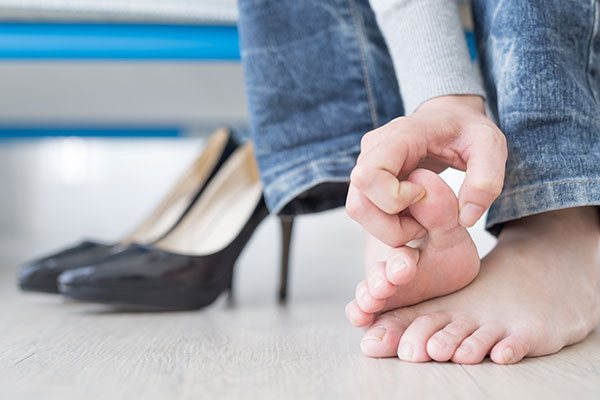
How do those nasty corns come up on the bottom of your feet or on top of your toes? Sometimes even in between your toes! To understand why corns come up, we need to understand what they are first.
Corns are areas of hyperkeratosis (or hard skin) that occur as a result of friction or abnormal pressure. They are commonly seen in individuals who wear tight footwear, are on their feet all day or have abnormal foot mechanics. This is also the case with small amounts of calluses (such as those on our heels or the balls of our feet), however, corns tend to sit deeper underneath the skin with overlying callus, hence the name ‘corn’.
Corns arise as a protective mechanism from the body. When our body senses as area of abnormal pressure on our feet, the outer most layer of our skin begins to harden to counteract this pressure. Over time, if the same pressure is applied, it can develop into a callus or eventually a hard or soft corn. For example, it is common for corns to arise on outside of our pinkie toes, particularly in ladies who frequently wear high heels. While these shoes may feel comfortable to wear, if the corns continue to arise, the shoes should be assessed and new ones recommended that are of a suitable width. If corns arise on the bottom of our feet, despite wearing suitable footwear, an individual’s foot function should be assessed to determine if it is contributing to the corn.
Corns can be annoying and often painful if they are not looked after properly. If you are having problems with your corns, let the team at SOLE – LUTION PODIATRY help you. You can reach us on 02 9569 5145

If you have been dealing with foot pain, heel pain, or discomfort when you walk, you have probably heard about orthotics. However, with so many options available, it can be hard to know where to start.

Ankle sprains are one of the most common injuries we see at Sole-Lution Podiatry. However, not all ankle sprains are the same. In fact, there are two main types, and the treatment for each one is quite different. So understanding which type you have is the first step toward a full recovery.

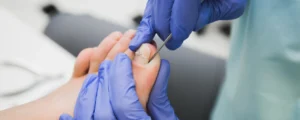
An ingrown toenail is painful, frustrating, and surprisingly common. Yet many people put off seeing a podiatrist because they don’t know what to expect.